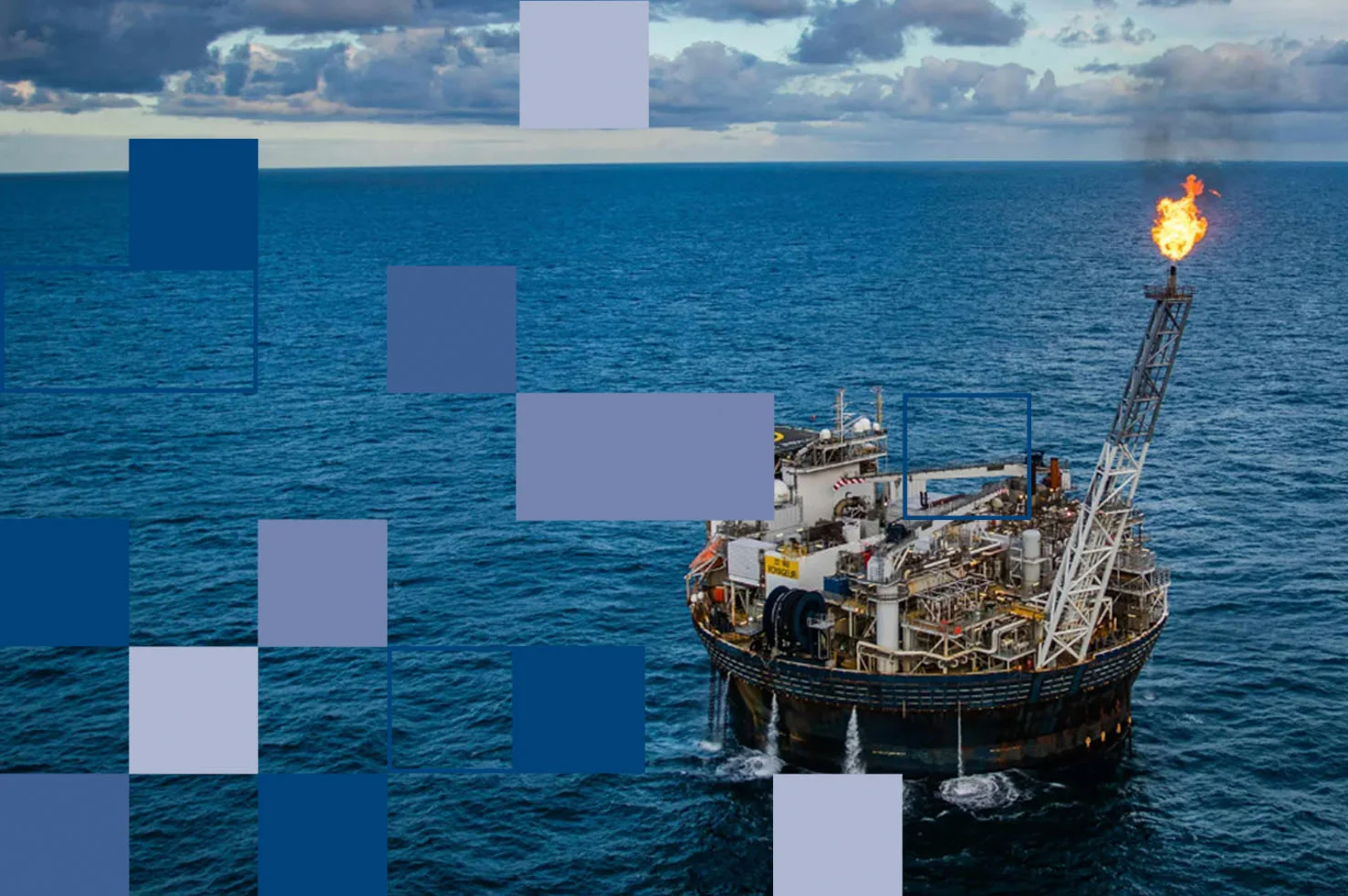


Across oil and gas, offshore wind and marine construction, safety and competence standards are tightly regulated. Employers, operators and regulators all require proof that offshore personnel are trained, assessed and prepared for the realities of working in remote, high-risk environments.
This guide explains the core offshore qualifications required in the UK and Europe, how OPITO training fits into the picture, which training providers are recognised, and how overseas equivalents compare for those working globally.
Why Offshore Qualifications Matter
Offshore environments present unique risks: confined spaces, helicopter travel, heavy lifting operations, hazardous materials and extreme weather conditions. As a result, offshore training is not simply a box-ticking exercise, it is fundamental to safety, compliance and operational continuity.
For employers, ensuring personnel are properly certified reduces:
- Safety incidents and downtime
- Regulatory exposure and compliance risk
- Insurance and contractual liability
For candidates, holding the right qualifications:
- Makes you immediately deployable
- Improves employability and pay prospects
- Demonstrates professionalism and commitment to safety
Core Offshore Qualifications in the UK & Europe
OPITO: The Industry Standard
In the UK and across much of Europe, OPITO (Offshore Petroleum Industry Training Organisation) sets the benchmark for offshore safety and emergency response training. Most operators require OPITO-approved certification as a minimum for offshore roles.
Combined BOSIET (or FOET)
The Basic Offshore Safety Induction and Emergency Training (BOSIET) - often delivered as Combined BOSIET with CA-EBS - is the entry-level qualification for anyone new to offshore work. It covers:
- Offshore safety induction
- Sea survival
- Helicopter safety and escape (HUET)
- Firefighting and self-rescue
- First aid
- Emergency breathing systems
For those returning offshore after time away, the FOET (Further Offshore Emergency Training) refresher is required.
MIST – Minimum Industry Safety Training
MIST focuses on hazard awareness and safe working behaviours offshore. It covers:
- Working safely
- Hazard identification
- Risk assessment
- Permit to work systems
- Environmental awareness
Most UK offshore roles now require valid MIST certification alongside BOSIET/FOET.
OPITO-Accredited Training Providers
There are recognised names in offshore training, particularly in the UK, however it’s important to note that OPITO accreditation is the key requirement, not the provider itself.
Some well-established OPITO-approved providers include:
- Petrofac Training Services
- 3T Global
- TWMA / Petrofac TWMA
- Emergency Training Academy (ETA)
- Coast Skills
- Regional OPITO-accredited centres across the UK and mainland Europe
All OPITO-approved providers deliver training to the same global standards, meaning certificates are transferable and recognised by operators. For candidates, the best choice often comes down to location, course availability and scheduling, rather than brand alone.
Offshore Wind & Renewables: GWO Certification
For offshore wind roles, GWO (Global Wind Organisation) training is increasingly required, either alongside or instead of OPITO, depending on the project. GWO Basic Safety Training typically includes:
- Working at height
- Sea survival
- Fire awareness
- Manual handling
- First aid
GWO training is delivered by GWO-accredited centres across the UK and Europe, with providers specialising in offshore renewables.
As offshore wind continues to expand, many professionals now hold both OPITO and GWO certifications, allowing them to move between oil & gas and renewables projects.
Additional Certifications That Strengthen Offshore Employability
Beyond mandatory safety training, certain qualifications can significantly improve employability and career progression:
Medical Certification
- UK Offshore Medical (OGUK)
- International offshore medical equivalents for overseas work
Marine & Vessel-Based Roles
- STCW certification (Standards of Training, Certification and Watchkeeping)
- Often required for FPSOs, installation vessels and marine support roles
STCW training (Standards of Training, Certification, and Watchkeeping) is mandatory international safety training for seafarers, established by the International Maritime Organization (IMO) to ensure consistent safety standards on commercial vessels worldwide. This covers essential skills like fire prevention, first aid, personal survival, and security awareness for anyone working on ships over 24 meters, including yachts, ferries, and cargo ships.
CA-EBS (Compressed Air Emergency Breathing System) training equips offshore oil and gas personnel with the knowledge and practical skills to safely use a compact, dry compressed air breathing system during helicopter emergency escapes. The training covers key hazards, correct deployment, and emergency response procedures, and is commonly delivered as part of wider safety programmes such as BOSIET or FOET to ensure personnel are prepared for helicopter ditching scenarios in a dry environment.
Health, Safety & Leadership
- NEBOSH (General or International Certificates)
- Emergency response or advanced first aid qualifications
These are not always mandatory but are highly valued for supervisory, HSE and leadership positions.
Overseas Offshore Qualifications: How Do They Compare?
While OPITO dominates the UK and European market, many global regions operate equivalent safety frameworks.
Middle East
- Regional offshore training centres often aligned with OPITO or operator-specific standards
- OPITO certification is frequently accepted or preferred
Asia-Pacific
- Countries such as Singapore, Malaysia and Australia operate recognised offshore safety schemes
- Many centres partner with OPITO or deliver equivalent survival and emergency response training
North America
- US offshore roles may require HUET, H2S, first aid and regulatory training aligned with local standards
- OPITO is increasingly recognised by international operators
For globally mobile professionals, OPITO remains one of the most transferable certifications, often accepted as a baseline even where local top-up training is required.
Keeping Certifications Valid
Most offshore certifications are time-limited:
- BOSIET/FOET typically valid for four years
- MIST requires periodic refresh
- Medical certificates usually valid for one to two years
Allowing certificates to lapse can delay mobilisation or result in missed opportunities, so proactive renewal planning is essential.

Getting Offshore-Ready
Offshore qualifications are not just about access - they’re about credibility, safety and career longevity.
If you train with an OPITO-accredited provider, the key is ensuring your certifications are:
- Current
- Recognised by operators
- Appropriate for your sector (oil & gas, wind, marine or LNG)
As offshore projects continue to evolve across traditional energy and renewables, professionals with the right training mix will remain in highest demand.
If you’re unsure which qualifications are required for your next role - or how your current certifications align with market demand - speaking to a specialist recruiter can help you plan your next move with confidence.
Mechanical Engineers
Mechanical engineers are heavily involved in rotating equipment, pressure systems, valves, and offshore maintenance.
Valuable training includes:
- Pressure Systems Safety Regulations (PSSR)
- API standards awareness (API 610, 617, 618, 570)
- Hydraulic systems and topsides equipment courses
- Root Cause Analysis (RCA) and failure investigation
- Offshore lifting and mechanical handling awareness
Why it matters:
Operators value mechanical engineers who understand asset integrity, failure prevention, and offshore equipment reliability, not just design theory.
Electrical & Instrumentation (E&I) Engineers
E&I engineers are critical to offshore safety systems, control systems, and hazardous area operations.
Recommended training:
- CompEx (Ex01–Ex04) for hazardous areas
- Functional safety (IEC 61508 / 61511)
- Control systems (PLC, DCS, SCADA)
- HV/LV switching and authorisation training
- Cyber security awareness for OT systems
Why it matters:
Offshore environments demand strict compliance with hazardous area legislation and functional safety standards -CompEx in particular is often a non-negotiable requirement.
Process & Chemical Engineers
Process engineers are key to production optimisation, flow assurance, and safety performance offshore.
Useful courses include:
- HAZOP and LOPA training
- Process safety management (PSM)
- Flow assurance fundamentals
- Flare systems and relief design awareness
- Offshore production operations courses
Why it matters:
Operators want process engineers who understand live production environments, operational constraints, and the consequences of design decisions offshore.
Structural & Civil Engineers
Structural engineers support offshore platforms, subsea structures, and fabrication yards.
Relevant training:
- Offshore structural codes (ISO 19901, API RP 2A)
- Fatigue and fracture mechanics
- Offshore installation and lifting analysis
- Fabrication yard and offshore construction awareness
- Temporary works and marine operations
Why it matters:
Understanding how structures are fabricated, installed, and maintained offshore improves constructability and reduces offshore execution risk.
Subsea & Pipeline Engineers
Subsea engineers often work across design, installation, and integrity management.
Key training areas:
- Subsea production systems
- Pipeline design codes (DNV-ST-N001, DNV-ST-F101)
- Installation methods and vessel operations
- Corrosion, cathodic protection, and integrity management
- ROV and intervention awareness
Why it matters:
Operators and service companies value engineers who understand the full subsea lifecycle, not just desk-based calculations.
Drilling & Wells Engineers
Drilling and wells roles require strong technical and regulatory competence.
Essential training includes:
- Well control certification (IWCF or IADC)
- Barrier management and well integrity
- Well abandonment and decommissioning courses
- Regulatory compliance (UK NSTA / HSE or regional equivalents)
Why it matters:
Well integrity and regulatory compliance are critical risk areas - certified, well-trained engineers significantly reduce operational risk.
QA/QC, Materials & Welding Engineers
Quality and materials disciplines play a major role in offshore project delivery.
Valuable training:
- ISO 9001 and project quality management
- CSWIP / BGAS / PCN certification
- Welding inspection and metallurgy courses
- Corrosion and materials selection
- Offshore fabrication and inspection awareness
Why it matters:
Operators rely on QA/QC and materials engineers to protect asset integrity across fabrication, installation, and operations.
Project, Construction & Engineering Managers
Leadership roles offshore require technical credibility and strong management skills.
Recommended development:
- Offshore construction management
- Contract management (NEC, FIDIC, LOGIC)
- Risk management and assurance
- Human factors and safety leadership
- Stakeholder and interface management
Why it matters:
Strong offshore leaders balance safety, schedule, cost, and people management under challenging conditions.
Soft Skills That Matter Offshore
- In addition to technical training, offshore employers highly value:
- Safety leadership and behavioural safety
- Clear communication in multicultural teams
- Decision-making under pressure
- Interface management across contractors and operators
Short courses in human factors, safety leadership, and incident investigation can significantly enhance employability.

Final Advice for Engineers Targeting Offshore Roles
Offshore operating companies and oilfield services firms don’t expect engineers to hold every possible certification - but they do look for:
- The right core offshore training
- Discipline-relevant technical courses
- Evidence of understanding offshore risk and operations
- Commitment to safe, compliant working practices
At Orion Group, we regularly advise engineers on which training genuinely improves offshore employability versus courses that add limited value. Aligning training choices with real project requirements is key to securing offshore opportunities.