
Offshore Careers vs the 9 to 5: Why Success in the Energy Industry Doesn't Follow One Path
30 Jul, 20267 mins
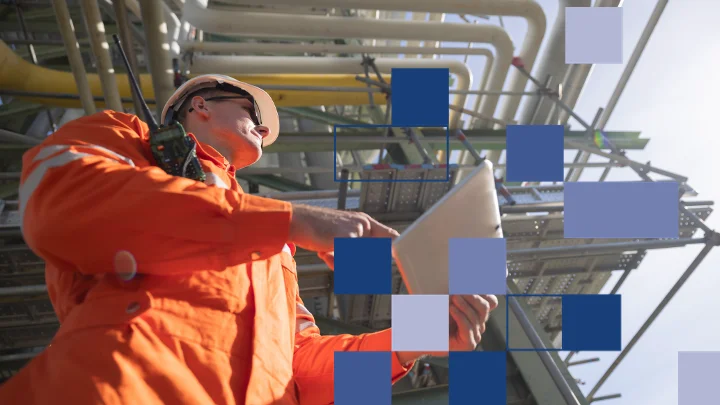
Is the traditional working week still the benchmark for career success?
For decades, career success has been measured against a familiar routine.
Wake up early. Commute to the office. Work Monday to Friday. Finish at five o'clock. Repeat the same schedule every week until retirement.
For many people, that structure provides stability, predictability, and a healthy work-life balance. But across the global energy industry, thousands of professionals have built successful careers that look nothing like this.
From offshore oil and gas platforms in the North Sea to LNG projects in Mozambique and Qatar, professionals are working rotational schedules that replace the traditional working week with extended periods offshore, followed by uninterrupted time at home.
It is a way of working that challenges many of our assumptions about careers, family life, and what work-life balance really means.
At Orion Group, we've spent time speaking to contractors working across oil and gas, LNG and the wider energy sector. Their experiences reveal that there is no single definition of career success.
For some people, success means routine. For others, it means opportunity.
It means travelling internationally, working on world-class engineering projects, developing specialist technical skills, and having weeks at a time to spend with family rather than simply evenings after work.
As the energy industry continues to evolve and demand for skilled professionals remains high, perhaps the real question is not whether offshore careers are better than office jobs.
Perhaps it is whether we've been defining success too narrowly.
Offshore Careers Offer a Different Kind of Work-Life Balance
When people hear the phrase work-life balance, most immediately think about finishing work at five o'clock and spending every evening at home.
Offshore professionals often see it differently. Working offshore demands complete commitment.
Long shifts are standard. The work is technically demanding. Safety is critical.
Projects cannot simply pause until tomorrow. As Vincent Lial explains:
"We are at least working 12 hours a day, minimum."
Life offshore is unlike almost any other workplace. Your accommodation is beside your workplace.
Your colleagues become your community.
You work, eat, exercise and relax alongside the same team for weeks at a time.
It requires discipline, resilience and teamwork.
Yet the real difference comes when the rotation finishes. Unlike many office-based careers, offshore work creates genuine separation between professional and personal life.
There are no emails to answer during annual leave. No daily commute. No checking messages before bedtime. When you're home, you're completely home. Vincent described this perfectly...
"When we are at home, we are fully dedicated to the family."
For many people working offshore jobs, that uninterrupted family time becomes one of the biggest benefits of the lifestyle. Rather than trying to squeeze family life around work, offshore rotations create space to be fully present.
Perhaps work-life balance should not be measured by how often we're home. Perhaps it should be measured by how present we are when we are there.
Offshore Jobs Come With Real Sacrifices
Of course, offshore careers are not for everyone.
Every benefit comes with compromise. While friends and family celebrate birthdays, anniversaries or school events, offshore workers are sometimes thousands of miles away.
Christopher Spies reflected on one particularly demanding assignment...
"It was really tough. It was like 10 weeks on site, two weeks off."
These experiences shape not only the individuals working offshore, but also those waiting for them at home. Partners become more independent. Families adapt to new routines. Communication becomes more important than ever.
Vincent summed it up honestly...
"It's important to have a strong partner and support network at home as we can be away for a long time, it's not easy for the family."
These comments highlight something often overlooked in discussions about offshore careers. Success offshore is rarely achieved alone. Behind every contractor is usually a strong family support network.
Traditional office jobs provide consistency.
Rotational working provides larger blocks of uninterrupted personal time.
Neither option is perfect. Both require compromise. Choosing between them is ultimately a personal decision.
Why So Many Professionals Choose Offshore Careers
If offshore life can be demanding, why do so many people stay in the energy industry for decades?
The answer often comes down to one word. Variety.
Few industries offer the opportunity to work across different countries, cultures, and engineering environments, in the way energy does.
One assignment may involve commissioning an LNG facility. The next could support an offshore maintenance campaign in the North Sea or a carbon capture development.
Hugo Hermitau explained why that variety continues to motivate him...
"It gives me the opportunity to travel abroad, to see the world and in the meantime, to work and earn my living."
Andrew Winter agreed...
"What kept me in was the variety, the international travel, the different scopes of work."
Many professionals begin their careers in traditional oil and gas before moving into LNG, offshore wind, hydrogen, carbon capture, or other energy transition projects.
The technical skills remain highly transferable. As projects evolve, careers evolve alongside them.
Vincent perhaps summarised it best...
"What I like is the change, to meet new people."
For people who enjoy learning, adapting and experiencing new cultures, few careers offer comparable opportunities.
Offshore Careers Build More Than Technical Skills
Technical competence may open the door, but long-term success offshore depends on far more.
Working on international energy projects develops communication, leadership, resilience, and problem-solving abilities, that remain valuable throughout a career.
Damien Trouillez described the mindset simply..
"The idea is finding solutions."
Projects rarely unfold exactly as planned. Equipment fails. Weather changes. Schedules move.
Professionals who remain calm and adaptable quickly become indispensable.
Hugo believes adaptability is one of the industry's greatest lessons...
"Be ready to adapt to different environments, different people."
Those experiences often shape people as much as their careers. As Hugo added...
"It's also good for your mental strength."
Living and working alongside multinational teams broadens perspectives.
Professionals learn to communicate across cultures, adapt quickly, and develop confidence in unfamiliar situations. These qualities increasingly define successful careers throughout the wider energy industry.
The Financial Benefits Are Only Part of the Story
Competitive salaries are often one of the first things candidates associate with offshore jobs.
For many, they provide the opportunity to achieve financial goals more quickly than traditional office careers. However, experienced contractors rarely describe money as the only reason they stay.
International experience. Technical development. Career progression. Exposure to world-class projects.
These often become equally important motivations.
Every project builds experience. Every assignment expands professional networks.
Every new country broadens understanding of how the global energy industry operates.
Over time, those experiences become one of the greatest assets any professional can possess.
Energy Careers Continue to Evolve
Today's energy industry looks very different from twenty years ago.
Professionals who once focused solely on offshore oil and gas projects are now supporting carbon capture, hydrogen, offshore wind, digital transformation, and AI-enabled operations.
Skills developed offshore remain highly relevant across these emerging sectors. That makes offshore careers surprisingly future-proof. Instead of limiting opportunities, they often create them.
Candidates entering the industry today are unlikely to spend forty years doing exactly the same job.
They will continue learning, adapting and evolving, alongside one of the world's fastest-changing industries.
There Is More Than One Way to Build a Successful Career
For generations we've been encouraged to believe that career success follows a single formula.
A permanent office. A Monday to Friday routine. Predictable hours. Weekends free.
For millions of people, that remains exactly the right choice. But it is not the only path.
The offshore energy industry offers something different.
It offers challenge. Adventure. International experience. Technical excellence. Periods of intense work followed by uninterrupted personal time. It asks more from people. But it often gives more in return.
Vivian Amaliasari perhaps summed it up best after more than twenty-four years working in the industry...
"It's challenging, but interesting. I love challenges. That's what keeps me in the industry."
Perhaps the real question is not whether offshore careers are better than traditional careers.
Perhaps it is this: Why do we still assume there is only one definition of success?
Ready to Explore a Career Beyond the Traditional 9 to 5?
Whether you're taking your first steps into the energy industry or looking for your next international assignment, Orion Group has been helping professionals build rewarding careers across oil and gas, LNG, offshore wind, carbon capture, hydrogen, and the wider energy sector, for almost 40 years.
Our specialist recruiters work with some of the world's leading operators, EPC contractors, and engineering organisations, connecting talented people with opportunities across the UK and beyond.
If you're ready to discover where an offshore career could take you, explore our latest oil and gas jobs, or speak to one of our specialist recruitment consultants today.
Your next opportunity could change far more than your job. It could change your perspective on what a successful career really looks like.
Related Posts

Can an Electrician Become an Electrical Engineer?
09 Oct, 2026