The Differences in Recruitment for an Offshore Vs Onshore Oilfield in the USA
12 May, 20265 mins
When we look at oil and gas production, the USA is one of the best producers, if not the top, in the world right now - ahead of the powerhouses that are Saudi Arabia and Russia. In 2023, U.S. crude oil production averaged 12.9 million barrels per day, and the EIA says the U.S., Russia, and Saudi Arabia together accounted for 40% of global oil production.
Recruiting for the oil and gas industry in the United States presents two very different landscapes; onshore and offshore. Each sector comes with its own challenges, skill demands, and opportunities.
Between 2024–2025, the split between onshore and offshore oil and gas production in the United States is overwhelmingly dominated by onshore extraction, which accounts for approximately 85% of total crude oil production. This majority directly shapes the distinct recruitment strategies, compliance requirements, and candidate profiles, for both sectors.
In this blog, we’ll explore the key differences between recruiting for onshore and offshore operations, including how locations and roles vary, and what it takes to match the right professionals to each environment.
Inland and on Water - Main Offshore and Offshore Areas in the US
Onshore
Due to the vastness of the US, onshore oil and gas production covers large swaths of the country, often in remote and challenging areas.
The main onshore oil and gas production areas in the U.S. are the Permian Basin in West Texas and south-eastern New Mexico, spanning 86,000 square miles. Other major shale regions include the Eagle Ford in South Texas, the Bakken in North Dakota, the Niobrara in Colorado, and the Haynesville across Louisiana and Texas.
These basins dominate U.S. output because they combine large resource volumes with modern horizontal drilling and hydraulic fracturing.
Image courtesy of https://www.eia.gov/maps/maps.php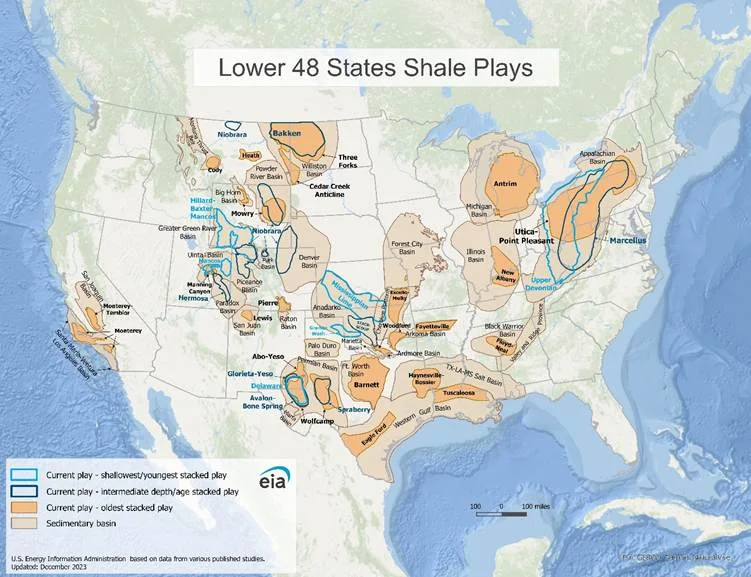
Offshore
The main offshore production area is the central and western Gulf of Mexico, where nearly all U.S. offshore leasing and development takes place, with over 97% of all U.S. Offshore Continental Shelf production).
That offshore region, which includes waters off Texas, Louisiana, Mississippi, and Alabama, remains a major source of U.S. crude oil and natural gas, accounting for about 15% of U.S. crude oil production and about 2% of dry natural gas production, in recent years.
The Main Differences in Operations
Other than one being on land and the other at sea, there are huge differences in onshore and offshore oil and gas production.
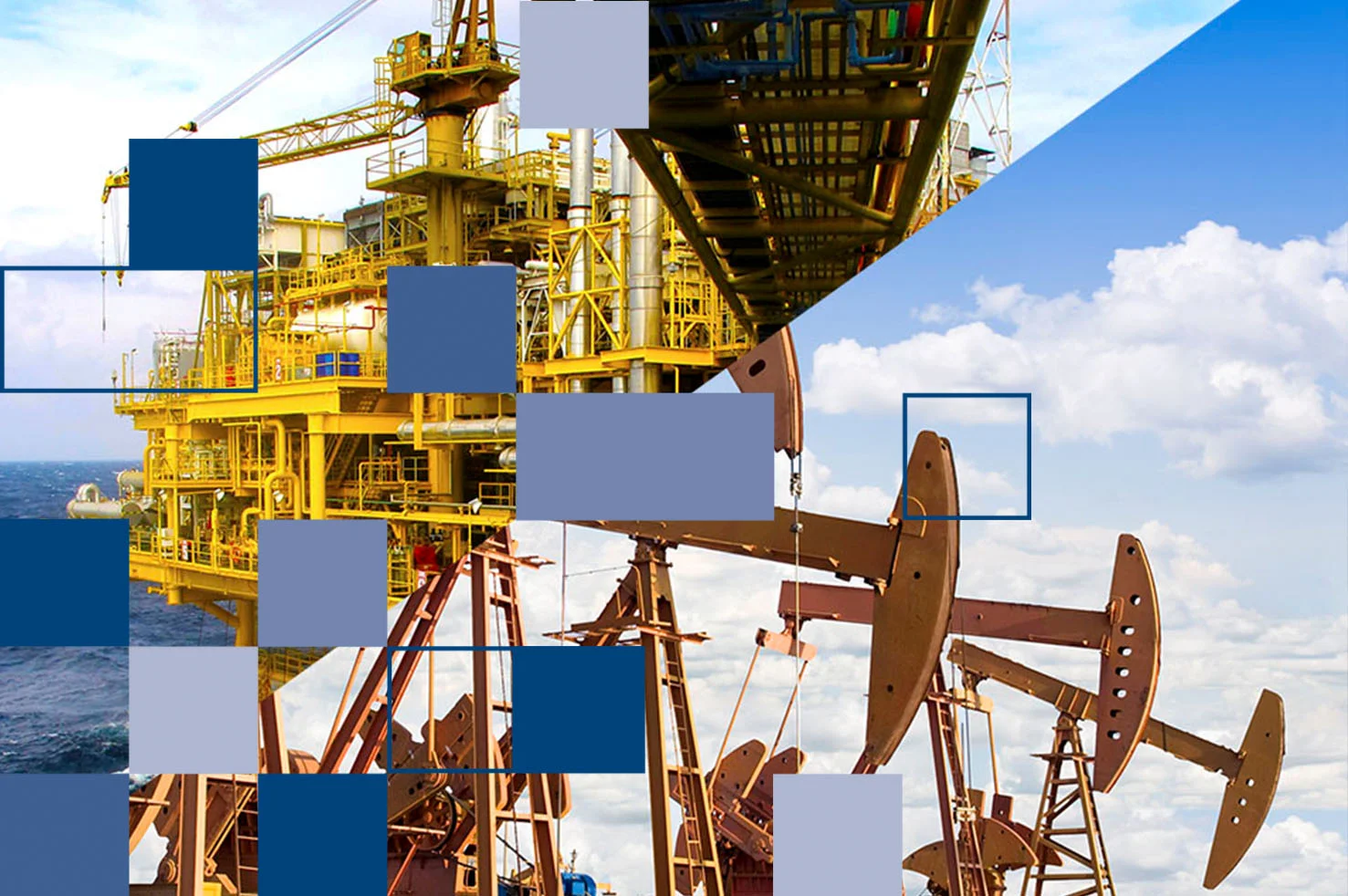
Before getting started on the differences, it’s important to note that onshore oil and gas can be broken down into 2 different types; shale and conventional oil via pumpjacks.
The primary difference between shale extraction and oil extraction from pumpjacks lies in the geology of the resource and the technology used to unlock it. Shale extraction requires high-pressure hydraulic fracturing (fracking) to release oil trapped in impermeable rock, while pumpjacks (nodding donkeys) typically extract free-flowing crude oil from porous, conventional reservoirs.
While both are very different in their use, for the purpose of this article, they will be classed as one when referring to onshore oil and gas production as a whole.
Production Techniques
While onshore operations use a mix of shale and pumpjack assets and techniques to obtain oil and gas, offshore oil and gas production uses platforms, subsea wells, or floating systems, to extract hydrocarbons from beneath the seabed.
Location
Onshore shale production takes place on land in shale basins, often with many wells on well pads connected to nearby processing facilities. Offshore production takes place in marine environments, from shallow water to deep water, and requires infrastructure built for sea conditions.
Cost and Logistics
Onshore shale is generally lower-cost and easier to scale up or shut in quickly, in response to market changes. Offshore projects usually need much larger upfront investment, longer lead times, and more complicated supply chains.
Production Profile
Shale wells often have faster initial declines and need continuous drilling to maintain output, while offshore fields can deliver large volumes for long periods if the reservoir is substantial. That makes the economics and planning style quite different between the two.
The Key Roles in Both
While both sectors operate in very different environments using different extraction techniques and solutions, where will also be some cross-over in terms of certain disciplines being necessary across both areas. An easy way to break this down is to split them into 3 distinctive groups:
- Onshore: land-based drilling, production, pipelines, and office operations.
- Offshore: rig, vessel, subsea, and platform operations.
- Shared: engineering, HSE, project management, and corporate support.
Here are a selection of key roles tour USA team regularly see across both onshore and offshore sectors:
Key roles in Onshore Operations
- Drilling, Completion, Workover Engineers/Consultants/Supervisors: Drilling Engineers, Consultants, and Supervisors play a key role in planning, executing, and optimising drilling operations to ensure safe and efficient well delivery.
- I&E Techs/Supervisors: handle the installation, calibration, and maintenance of electrical and instrumentation systems to support reliable site operations.
- HSE Supervisors: ensure compliance with health, safety, and environmental regulations, fostering a culture of protection and risk management across all project phases.
- Construction Supervisors: coordinate and oversee onshore infrastructure development, ensuring projects are delivered safely, efficiently, and to specification.
- Operators: maintain and control processing equipment and field operations, optimising production and ensuring stable workflow across the site.
- Inspectors: perform detailed assessments and quality checks on equipment, structures, and processes to ensure compliance with industry standards and operational integrity.
These roles are essential for safe, efficient drilling and production, ranging from hands-on rig work to high-level engineering and site supervision. These roles are often in high demand and are critical to the success of exploration and production projects.
Key roles in Offshore Operations
- OIM (Offshore Installation Manager): oversees all operations and personnel on the platform, ensuring safe, efficient production and regulatory compliance.
- Safety Training Supervisor: leads safety drills and competency programs, maintaining a strong safety culture and readiness across all offshore teams.
- DPO (Dynamic Positioning Officer): monitors and controls vessel systems to maintain precise positioning, supporting critical offshore operations and stability.
- Electrician: installs, maintains, and repairs electrical systems and equipment to keep offshore assets running reliably and safely.
The roles above are only touching the surface of what is required to design, build, operate and maintain an offshore operation. They require hundreds if not thousands of different personnel in the organisation, as well as contractors, third parties, and partners, to bring everything together. Engineering is core to oil and gas production, and this includes engineers specialised in exploration, production, petroleum, drilling, reservoirs, and completions, to name but a few.
Shared roles across both Operations
Oil and gas recruitment also covers support functions that are needed onshore for both offshore and land operations. These include human resources, HSE, project management, finance, administrative support, logistics, IT support, project controls, and business operations roles.
How Orion Group Supports both Operations
At Orion Group, our US based team, based in the heart of the energy capital of the world, Houston, are proud to supply top talent to both offshore and onshore sectors, supporting clients from drilling platforms in the Gulf of Mexico to production facilities across Texas, Oklahoma, and North Dakota.
Established there for almost a quarter of a century, Orion has been able to achieve great success for our clients in the US energy sector, with the provision of seasoned onshore and offshore professionals across all sectors and disciplines.
With a large and diverse talent pool at their disposal, and with a team of seasoned, experienced recruiters and account managers, who know the US energy recruitment scene inside out, they are available to support your project and your specific resourcing needs.
If you’re an employer looking to secure specialised recruitment assistance for your project, them please get in touch with team: houston@orioneng.com
FAQs
1. What makes the U.S. one of the top oil and gas producers globally?
The U.S. leads global production thanks to advanced drilling technologies and vast shale resources - producing an average of 12.9 million barrels per day in 2023. Together with Saudi Arabia and Russia, the U.S. accounts for around 40% of global oil output.
2. How does onshore oil and gas production differ from offshore in the U.S.?
Onshore operations dominate, making up about 85% of U.S. crude production. Offshore accounts for around 15% and involves more complex, high-cost infrastructure. Onshore projects are quicker to scale and often rely on shale and conventional pumpjack extraction, while offshore uses rigs, platforms, and subsea systems.
3. Where are the main oil and gas production areas in the U.S.?
Onshore production centers include the Permian Basin, Eagle Ford, Bakken, Niobrara, and Haynesville. Offshore activity is focused in the central and western Gulf of Mexico, off the coasts of Texas, Louisiana, Mississippi, and Alabama.
4. What are some key job roles in onshore and offshore oil and gas operations?
Onshore roles include drilling engineers, production engineers, field supervisors, and HSE officers. Offshore roles include drilling supervisors, petroleum engineers, DPOs, OIMs, as well a roustabouts, riggers, and skilled trades personnel to keep things running. Shared roles between both environments include HSE, project management, and engineering support.
5. How does Orion Group support oil and gas recruitment across the U.S.?
Based in Houston, Orion Group connects top talent with onshore and offshore projects nationwide. Their experienced recruiters and large talent pool help employers in regions like the Gulf of Mexico, Texas, and North Dakota secure skilled professionals for all stages of energy operations.