The Workforce Challenge Behind the Data Centre Boom
08 Oct, 2026


Artificial intelligence is often discussed as a software revolution.
We hear about increasingly capable models, autonomous systems, generative AI and the race between technology companies to build the next generation of computing capability.
But behind every AI model is something much more physical.
Concrete. Steel. Electrical infrastructure. Cooling systems. Substations. Backup generation. Fibre networks. Control systems. Construction programmes. Commissioning teams. Engineers.
The AI revolution may be digital at the point of use, but the infrastructure supporting it is decidedly physical.
And as demand for AI accelerates, that infrastructure is becoming one of the most significant areas of investment across the global energy and engineering landscape.
According to the International Energy Agency, global data-centre electricity consumption is expected to roughly double to around 950 TWh by 2030. AI-focused data centres are growing even faster, with their electricity consumption projected to triple over the same period.
The implication is clear: the future of AI will depend not only on computing power, algorithms and data, but on our ability to build and operate the infrastructure capable of supplying that computing power reliably.
That creates a very different challenge.
The question is no longer simply how quickly can we develop AI? It is how quickly can we build the infrastructure required to support it?
Data centres have always required significant amounts of electricity. What is changing is the scale, density and speed of demand.
AI workloads require high-performance accelerated computing, with increasingly powerful processors concentrated into relatively small physical footprints. That creates much higher power densities than traditional data-centre environments.
The IEA estimates that the power density of AI servers increased elevenfold between 2020 and 2025, with a further fourfold increase expected by 2027.
This matters because adding computing capacity is no longer simply a question of installing more servers.
The electrical infrastructure has to support it.
That means connections to the grid, substations, transformers, switchgear, distribution systems, UPS infrastructure and backup generation all have to be designed around increasingly demanding loads.
And the challenge is not necessarily a lack of electricity in absolute terms. In many markets, it is the ability to get sufficient power to the right location, at the right time and with the required reliability.
The IEA estimates that around 20% of planned data-centre projects could face delays if grid-related risks are not addressed.
This is where the worlds of technology and energy begin to converge.
The traditional perception of a data centre is changing.
It was once primarily viewed as a technology facility: somewhere to house servers and protect digital infrastructure.
Increasingly, it is becoming an energy-intensive industrial facility that happens to contain computing equipment.
That changes the engineering challenge considerably.
Developers need to consider power availability at the earliest stages of site selection. Grid connections can become a critical factor in determining whether a project is viable and when it can become operational.
Power generation, energy storage, renewable procurement, grid infrastructure and backup systems are therefore becoming fundamental components of data-centre development.
The IEA expects renewables to meet a significant proportion of additional data-centre electricity demand through 2030, while natural gas and other dispatchable sources will also play important roles. Nuclear is expected to become increasingly significant later in the decade.
This creates opportunities, but also complexity.
A data-centre development can increasingly involve expertise traditionally associated with power generation, utilities, oil and gas, major construction and industrial infrastructure.
The boundaries between these sectors are becoming much less distinct.
Power is only half of the equation.
The electricity consumed by high-performance computing ultimately becomes heat, and that heat has to be managed.
As computing densities increase, traditional approaches to cooling become more challenging. Air cooling has limitations when dealing with the thermal loads generated by increasingly powerful AI hardware, accelerating interest in technologies such as liquid cooling and more sophisticated thermal management systems.
This isn't simply a technology upgrade.
It affects the physical design of facilities, mechanical systems, water use, energy efficiency, maintenance strategies and operational resilience.
The European Commission already identifies cooling demand, water consumption and carbon emissions as significant considerations in the sustainability of data centres.
The result is another point of convergence.
Electrical engineers, mechanical engineers, HVAC specialists, controls and automation professionals, commissioning engineers and facilities specialists are increasingly working within an environment where their disciplines are directly connected to the performance of the digital infrastructure.
The data centre may be built for computing, but its success depends on engineering.
For a conventional industrial facility, an interruption to power may cause lost production.
For a critical data centre, the consequences can extend much further.
Cloud platforms, financial systems, communications, healthcare, public services and increasingly AI applications can depend on continuous availability.
That makes resilience fundamental to the design.
Redundant electrical systems, backup generation, UPS systems, cooling redundancy, fire protection, monitoring and control systems all have to work together. And they need to be tested, commissioned and maintained to an exceptionally high standard.
As AI workloads become more important, so does the infrastructure supporting them.
This puts greater emphasis on the entire project lifecycle, from design and procurement through construction, commissioning and operations.
It also increases the importance of specialist engineering expertise.
A data centre isn't finished when the building is structurally complete. It is finished when thousands of interconnected systems have been installed, tested, commissioned and proven to work together under demanding operating conditions.
This brings us to perhaps the least discussed part of the AI infrastructure challenge.
People.
The technology may be advancing at extraordinary speed, but infrastructure does not move at the same pace.
A new AI model can be developed and deployed rapidly. A power connection, substation, cooling system or major data-centre facility requires planning, engineering, procurement, construction and commissioning.
And all of those stages depend on people with the right skills.
That means demand is growing for electrical and mechanical engineers, project managers, project controls professionals, commissioning specialists, construction managers, QA/QC professionals, planners, HSE specialists and technicians.
It also creates demand for people who understand how different disciplines interact.
This is particularly significant because many of the skills required are not entirely new.
They already exist across sectors such as oil and gas, power generation, utilities, construction, manufacturing and industrial engineering.
The challenge is increasingly about transferring those skills into a rapidly expanding digital infrastructure market.
An engineer who understands high-voltage systems does not suddenly become irrelevant because the end customer is a technology company. A commissioning professional who has worked on complex industrial facilities already understands many of the principles required to bring critical infrastructure safely into operation.
The environment may be different.
The underlying engineering disciplines are often remarkably familiar.

This is why the growth of AI infrastructure should not be viewed as a technology story alone.
It is an energy story.
It is an engineering story.
It is a construction story.
It is a supply-chain story.
And increasingly, it is a workforce story.
The companies building the next generation of data centres are competing not only for land, power and investment, but for specialist expertise.
That competition is likely to become increasingly international.
As demand grows across North America, Europe, the Middle East and Asia-Pacific, organisations will need access to people who can deliver complex infrastructure projects safely, efficiently and at speed.
For employers, this means workforce planning needs to become part of infrastructure strategy rather than something considered once a project is underway.
For engineering and construction professionals, it presents an opportunity to transfer highly valuable experience into one of the fastest-growing areas of infrastructure investment.
Building the infrastructure behind intelligence
The AI revolution is often presented as something happening inside a screen.
In reality, much of the transformation is happening outside it.
It is happening at substations and construction sites. In control rooms and mechanical plants. Inside cooling systems and electrical rooms. Across engineering offices, commissioning teams and project sites around the world.
The infrastructure behind AI is becoming a critical part of the global economy.
And the scale of that infrastructure will require more than capital and technology. It will require engineering expertise, project delivery capability and people who understand how to turn ambitious plans into operational reality.
For businesses operating across energy, engineering and infrastructure, this represents a significant shift.
The data-centre sector is not simply creating a new market.
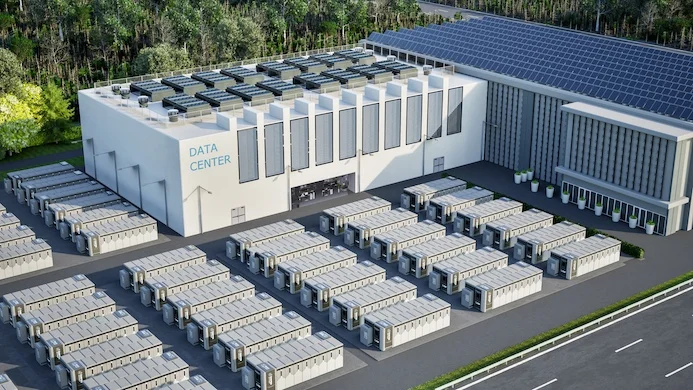
It is bringing together industries, technologies and skill sets that have traditionally operated separately.
The organisations best positioned to benefit may ultimately be those that understand this convergence early and can connect the right expertise to the right projects.
Because the race to build the future of AI isn't taking place solely in the cloud.
It is being built on the ground.
Ready to build what comes next?
The infrastructure behind AI is creating new opportunities for businesses and engineering professionals across the energy, construction and infrastructure sectors.
Whether you’re looking to build a team for a major data-centre project or considering how your existing engineering, commissioning, construction or project experience could transfer into this growing market, Orion Group can help connect the right expertise with the right opportunities.
Talk to our team to discuss your next project, your talent requirements or your next career move.
Frequently Asked Questions
What skills are in demand across the data-centre sector?
The growth of AI infrastructure is increasing demand for a wide range of engineering and project delivery professionals, including electrical and mechanical engineers, project managers, project controls professionals, commissioning specialists, construction managers, QA/QC professionals, planners, HSE specialists and technicians.
Do I need previous data-centre experience to work in the sector?
Not necessarily. Many of the skills required for data-centre development already exist across oil and gas, power generation, utilities, construction, manufacturing and industrial engineering. Experience in areas such as high-voltage systems, commissioning, construction and complex industrial facilities can provide a strong foundation for moving into the sector.
Why is power such an important issue for AI data centres?
AI workloads require increasingly powerful computing infrastructure, resulting in significantly higher power densities. This means data-centre developers need to consider grid connections, substations, transformers, switchgear, distribution systems, UPS infrastructure and backup generation as part of the overall project.
Why is cooling becoming more important?
The electricity used by high-performance computing ultimately becomes heat. As computing densities increase, managing that heat becomes more challenging, increasing interest in technologies such as liquid cooling and more sophisticated thermal management systems. Cooling also affects mechanical systems, water use, energy efficiency and operational resilience.
What engineering disciplines are involved in data-centre projects?
Data-centre projects bring together a broad range of disciplines, including electrical and mechanical engineering, HVAC, controls and automation, commissioning, construction, project management and facilities management.
Why is commissioning important in a data centre?
A data centre isn't complete simply because the building has been constructed. Its interconnected electrical, mechanical, cooling, control and other systems need to be installed, tested and commissioned to demonstrate that they can operate together safely and reliably.
Are data-centre opportunities available internationally?
The growth of AI infrastructure is creating demand across major markets including North America, Europe, the Middle East and Asia-Pacific. As the sector expands, organisations increasingly need access to specialist professionals who can deliver complex infrastructure projects internationally.
What opportunities does AI infrastructure create for oil and gas professionals?
Many oil and gas professionals have experience that can transfer into data-centre and wider critical infrastructure projects. High-voltage electrical systems, complex construction environments, commissioning, project delivery, HSE and working on large-scale industrial facilities are examples of skills that can be relevant to the sector.
What does the growth of AI infrastructure mean for employers?
For employers, the growth of data centres means competition for specialist engineering and project delivery talent is likely to increase. Workforce planning therefore needs to form part of infrastructure strategy from the earlier stages of a project rather than being addressed only once delivery is underway.
How can Orion Group help with data-centre and infrastructure recruitment?
Orion Group works across energy, engineering and infrastructure, connecting organisations with specialist technical and project delivery professionals. If you are planning a project or looking for your next opportunity, our team can discuss your requirements and the skills you need to deliver it.
Client enquiries: Click here
Candidates looking to search jobs Click here