
Houston at the Heart of Energy: Inside the Gulf Coast Market
02 Mar, 20266 mins
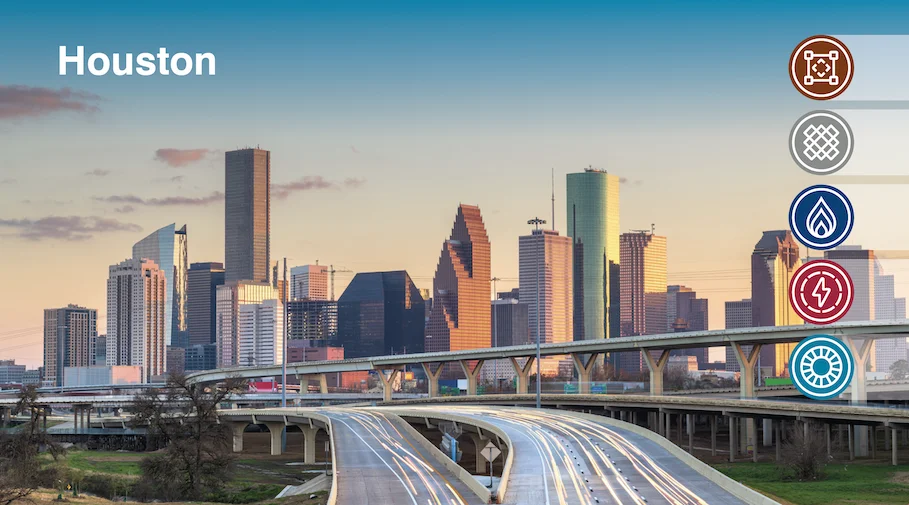
Houston has long been regarded as the Oil and Gas and energy capital of the United States. From upstream exploration in the Gulf of Mexico to world scale LNG terminals and the rapid rise of data centre infrastructure, the city sits at the centre of a complex and evolving ecosystem.
To understand what that means for employers and candidates alike, we spoke with Ross MacKay, VP of Operations at Orion’s Houston office. His view of the market is measured and pragmatic. As he explains, the Gulf Coast is not a single story. It is a collection of overlapping cycles, sector specific pressures and long-term structural shifts, that are reshaping how energy companies hire.
A Market in Transition
“It’s an interesting time,” Ross begins. "There has been a big shift.”
Only 12 to 18 months ago, much of the traditional oil and gas market in Houston was strongly candidate led. Operators and EPC contractors were competing hard for experienced engineers and project professionals. Since then, a wave of M&A activity, corporate restructuring and commercial efficiency initiatives, has altered the landscape.
In certain areas, that has resulted in more talent entering the market. In others, it has simply changed how companies approach hiring. What is clear is that the balance of power has shifted, at least in parts of the sector.
Yet this is not a story of contraction. Far from it. Along the Gulf Coast, LNG is moving at pace. Multiple projects have been sanctioned, with others moving towards final investment decision. At the same time, mission critical infrastructure, particularly data centres supporting AI and digital growth, is placing fresh demand on technical skill sets.
“It’s a nuanced workplace,” Ross says.“It depends entirely on which sector you are looking at.
Upstream, Midstream and Downstream: Different Rhythms
The distinctions between upstream, midstream and downstream activity remain important in Houston.
Upstream hiring continues to be closely tied to oil price fluctuations. When prices are strong and capital projects move forward, demand accelerates quickly. When uncertainty creeps in, projects and hiring can pause just as quick.
Midstream and downstream, by contrast, tend to offer greater consistency. Refining and processing facilities along the Gulf Coast operate on planned turnaround and outage cycles. These are scheduled well in advance and create more predictable workforce requirements.
“From a downstream perspective, they are always planning the next maintenance or upgrade event to ensure equipment and facilities operate efficiently and safely,” Ross explains. “It is more structured and less directly tied to the oil price.”
That structural consistency creates opportunities for contractors, particularly those with turnaround and maintenance experience.
The Workforce Challenge: Still a Skills Gap
Despite recent restructuring and consolidation in the upstream sector, the long-discussed skills gap in energy has not disappeared.
“There has been a flood of personnel from some consolidation activities,” Ross notes. “But there is still a talent shortage.”
Retirements continue to thin the ranks of highly experienced professionals. Competition from adjacent sectors, including renewables and mission critical energy infrastructure projects, further stretches the available talent pool. The gap between demand and fully qualified candidates remains significant, especially for specialist and leadership roles.
Retention has also become more complex. Wage inflation, benefit offerings, competitive counter offers and the expectation of remote or hybrid working, have reshaped the employment proposition. The post Covid workforce is different from before.
Operators and EPCs that commit to flexibility and clear career pathways are generally navigating these waters well. Those that do not risk losing out on top talent.
Permanent or Contract? It Depends on the Project
The balance between permanent and contract hiring in Houston is closely linked to project lifecycle and market confidence.
In LNG, Ross is seeing substantial permanent hiring, particularly in project leadership and core team build out. These are long term assets and require stable management structures. However, large scale construction still depends heavily on temporary and contract labour.
“When you are building huge projects with thousands of workers, the ability to scale up and scale down is critical,” he says.
In the upstream market more broadly, organisations are reducing large permanent headcount in areas where demand fluctuates. Instead, they are building smaller, highly skilled core teams and supplementing them with contractors and statement of work specialists, as required.
This model allows for greater cost control and capital discipline, particularly in an environment shaped by oil price volatility and ongoing uncertainty around tariffs and global supply chains.
When projects depend on equipment and materials sourced worldwide, rapid policy changes can significantly affect pricing and timelines. That uncertainty makes flexible workforce models even more attractive.
Oil, Renewables and the Blurring Lines
The relationship between traditional oil and gas and renewables in the United States continues to evolve. Under the previous administration, renewable investment received strong political backing. The current administration has shifted emphasis back towards traditional oil and gas activity.
That policy fluctuation has created challenges, particularly in offshore wind. Developers such as Ørsted have faced project suspensions and legal hurdles in the Northeast.
For Ross, the bigger issue is investor confidence. “How do we get companies to continue investing in infrastructure when the direction can change with each administration?”
Nevertheless, major energy players including BP, Shell and ExxonMobil remain active across both traditional and lower carbon initiatives.
For now, LNG looks set to dominate the Gulf Coast narrative for the next decade, while data centres and digital infrastructure add another layer of demand.
LNG Experience: Transferable Skills or Hard Requirements?
With LNG expanding globally, competition for experienced professionals is intense. Orion is supporting projects not only in the United States but also in locations such as Mozambique, where TotalEnergies is progressing major developments.
One of the key personnel questions is whether employers are willing to consider transferable skills from adjacent sectors, such as refining or petrochemicals.
“There is always talk about leveraging transferable skills,” Ross says. “But when it comes to the final decision, specific LNG experience often wins.”
While certain technical and process driven roles require direct LNG facility, equipment and project exposure, Ross believes there is scope for greater flexibility. Many professionals across the wider energy industry have delivered some of the largest and most complex energy projects in the world. Harnessing that broader experience would help ease talent bottlenecks.
Strategic Partnerships
Over the past 12 to 18 months, client conversations have also evolved.
In a more client led market, there can be a temptation to focus purely on cost and immediate needs. However, Ross is clear that the greatest value comes from early engagement and strategic planning.
“When clients share project information at every stage, we can plan ahead,” he explains. “We can talent map, engage people in advance and significantly reduce time to hire.”
Reactive hiring, by contrast, places strain on everyone involved. Last minute requirements narrow the available pool and often extend timelines. In competitive markets like Houston, that can mean losing out on top candidates.
Companies that engage recruitment partners as true collaborators, rather than transactional suppliers, gain a competitive edge.
Employer Brand and the Next Generation
Employer brand plays a growing role in attracting talent, particularly among younger professionals.
Candidates earlier in their careers increasingly look for companies with credible ESG commitments and a clear sense of purpose. Building those values into the business is not simply a marketing exercise. It directly influences attraction and retention.
At the same time, authenticity matters more than slogans. “People buy into it and value transparency,” Ross says. “They can see through the fluff.”
Clear career pathways, honest conversations about expectations and visible leadership engagement all contribute to a compelling proposition.
What Sets Orion Houston Apart
In a competitive recruitment market, differentiation can be subtle. Many providers offer similar core services.
For Ross, the difference lies in ownership and local expertise. Unlike some larger competitors who offshore elements of delivery, Orion’s Houston team is embedded in the local market and are relationship driven rather than purely transactional.
“If someone brings in the work here, they stay involved,” he explains. “We do not pass it on and walk away.”
That continuity extends globally. Regular collaboration with colleagues in London and Aberdeen ensures clients benefit from international insight and coordinated support. Complex solutions, such as payroll in one country and invoicing in another, require joined up thinking and a strong compliance framework.
Beyond filling roles, Orion frequently supports clients with real time market intelligence and benchmarking exercises. In a market that has shifted significantly over the past year, understanding accurate rate and salary benchmarks is critical.
Ross recalls one contractor who moved from an upstream offshore assignment into offshore wind in the Northeast US. What began as a three-month placement evolved into an 18-to-24-month assignment, with further extension likely. That continuity of opportunity, sometimes across sectors and regions, reflects Orion’s global footprint and long-term relationships.
Leadership, Growth and Culture
Looking ahead, Ross’s priorities for the next 12 months are clear: strengthening our current position within our key markets and exploring growth opportunities in closely aligned sectors.
Houston, like the energy industry itself, has historically moved through distinct expansion and contraction cycles. Yet it remains the epicentre of the global energy industry. For Ross, that dynamism is part of the appeal.
Internally, he looks for resilience, accountability and motivation when building his team. Recruitment is demanding. Rejection is frequent. Success requires energy and self-discipline.
"We are a lean team, where everyone is expected to own their space and bring drive and accountability to their role.”
That ownership culture is reflected in Orion’s tenure statistics. Many team members have been with the business for seven to ten years or more, a testament to a long-term approach that mirrors the partnerships they aim to build with clients.
The Epicentre Continues to Evolve
Houston’s story is one of adaptation. Oil price cycles, policy shifts, global supply chain challenges and the rise of LNG and digital infrastructure have all left their mark.
Yet through each transition, the city has remained central to the global energy conversation. For Orion's Houston team, the opportunity lies in helping clients and candidates navigate that complexity with clarity and foresight.
In a market defined by nuance rather than simple headlines, strategic partnership, local expertise and a human touch remain powerful differentiators.
Looking to Hire or Considering Your Next Move in Houston?
If you are an employer navigating workforce planning across LNG, upstream, midstream or digital infrastructure, early engagement makes all the difference. Strategic talent mapping and clear market intelligence can significantly reduce time to hire and improve retention outcomes.
If you are a candidate exploring opportunities across the Gulf Coast, whether in permanent leadership roles or contract project positions, understanding where the market is moving is key to making the right career decision.
For a confidential conversation about hiring strategy or your next opportunity, contact Ross MacKay (VP of Operations) at our Houston office... click here to contact me