
AI in Oil and Gas Jobs: Hiring Trends and Skills Shaping 2026
16 Jun, 20267 mins
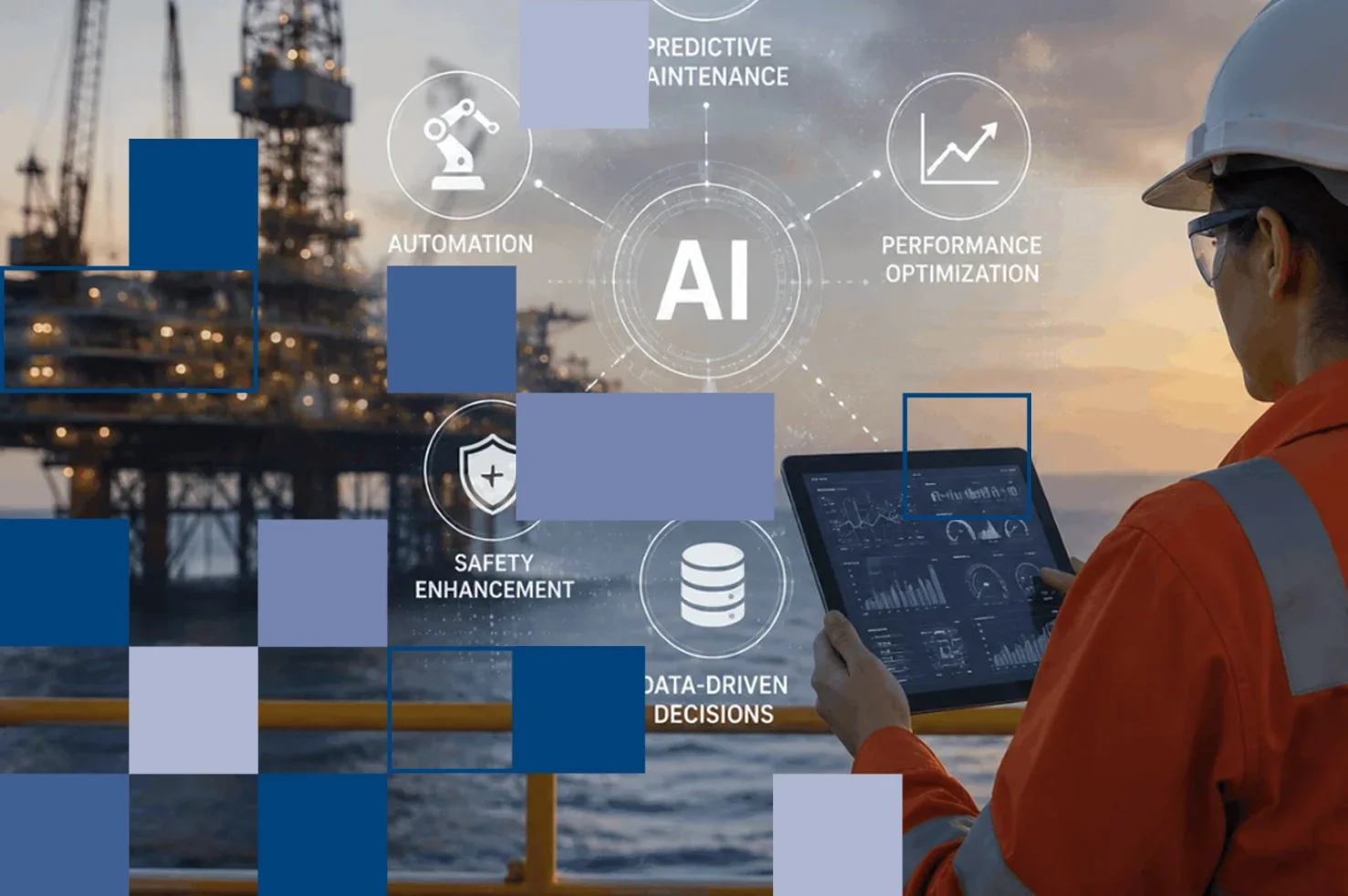
Artificial intelligence (AI) is no longer a future concept in the energy sector. It is here, it is embedded, and it is actively transforming how work is carried out across the industry. From exploration through to operations and project delivery, AI is reshaping the expectations placed on professionals and redefining what it means to succeed in oil and gas jobs.
Importantly, this shift is not about replacing people. It is about enhancing their capabilities. Engineers, geoscientists, and operations specialists are now working alongside advanced systems that can analyse vast datasets, predict outcomes, and optimise performance, in ways that were not possible before.
For employers, this transformation is driving a significant evolution in oil and gas recruitment. The focus is moving towards individuals who can combine traditional technical expertise with digital and data-driven skills. For candidates, it presents a major opportunity to future-proof careers and accelerate progression.
This blog explores how AI is changing oil and gas jobs in 2026, the new roles and skills emerging as a result, and how recruitment strategies are evolving to meet these demands.
Why AI Is Transforming Oil and Gas Jobs in 2026
Over the past decade, the oil and gas sector has experimented with automation and digital tools. However, in 2026, the industry has moved well beyond pilot projects. AI is now a core operational utility, embedded across workflows and decision-making processes.
The shift is being driven by advances in generative AI, machine learning, and autonomous systems. These technologies are enabling organisations to move from reactive operations, to predictive and even self-optimising models.
For example, instead of relying solely on historical data and manual analysis, engineers can now use AI to generate multiple scenarios, assess risks, and identify optimal solutions in real time. This is fundamentally changing how decisions are made across exploration, production, and maintenance.
Crucially, AI is enhancing rather than replacing oil and gas jobs. Human expertise remains essential. What has changed is the way that expertise is applied. Professionals are now expected to interpret AI outputs, validate insights, and make informed decisions based on a combination of data and experience.
This is why digital capability is becoming a core requirement across the sector. Whether in engineering, operations, or project management, professionals who understand how to work with AI tools are increasingly in demand.
For oil and gas recruitment, this represents a major shift. Employers are no longer hiring purely for technical knowledge. They are looking for individuals who can operate effectively in a digitally enabled environment.
Gen AI and the Future of Exploration in Oil and Gas Jobs
Exploration has always been one of the most complex and high-risk areas within the oil and gas sector. The ability to accurately interpret subsurface data and predict the presence of hydrocarbons is critical to success.
Generative AI is now transforming this process.
By analysing vast volumes of seismic data, geological models, and historical exploration results, AI systems can generate detailed subsurface models with a level of speed and accuracy that was previously unattainable. These models can simulate different scenarios, helping geoscientists to better understand uncertainty and make more informed decisions.
One of the most significant benefits is the reduction in “dry hole” risk. Studies suggest that AI-driven exploration can reduce this risk by up to 15 to 20 percent. This has a direct impact on project viability and cost efficiency.
For professionals working in oil and gas jobs, this shift is changing the nature of exploration roles. Geoscientists and engineers are moving away from purely manual interpretation, towards data-driven analysis and decision-making.
This shift is also changing expectations. Professionals are now required to:
- Work confidently with large datasets
- Understand and interpret AI-generated insights
- Apply data-driven thinking to exploration strategies
The role of the oil and gas consultant is evolving in the same way. Consultants are increasingly expected to combine geology and engineering expertise with data analytics and AI knowledge, bridging the gap between technology and real-world decision-making.
At Orion Group, we see growing demand for exploration professionals who can combine technical expertise with data-driven skills. As a result, these hybrid skills are becoming highly sought after across oil and gas jobs.
Digital Twins and Autonomous Operations in Oil and Gas Jobs
Operations across the oil and gas sector are becoming more intelligent, efficient, and autonomous.
At the centre of this transformation are digital twins. These are virtual representations of physical assets, such as offshore platforms, rigs or processing facilities, continuously updated with real-time data.
In 2026, digital twins are no longer passive monitoring tools. They are evolving into systems that can actively support operations, including:
- Scheduling maintenance
- Allocating tasks
- Optimising performance
This reduces the need for constant manual intervention. Predictive maintenance is a clear example of this shift. By analysing equipment data, AI systems can identify potential failures before they occur, helping reduce downtime by up to 30% while improving efficiency and lowering costs.
These advancements are having a direct impact on oil and gas operations and maintenance jobs. Roles are moving away from reactive problem-solving, towards proactive optimisation.
Engineers are now expected to work alongside digital systems, interpreting data, validating insights, and ensuring automated processes are running effectively.
This shift is also influencing oil and gas staffing strategies. Employers are increasingly looking for candidates who can operate in digital environments, combining hands-on experience with an understanding of advanced technologies.
The result is a more efficient, safer, and more resilient operational model. However, it also requires a global workforce that is adaptable and comfortable with change.
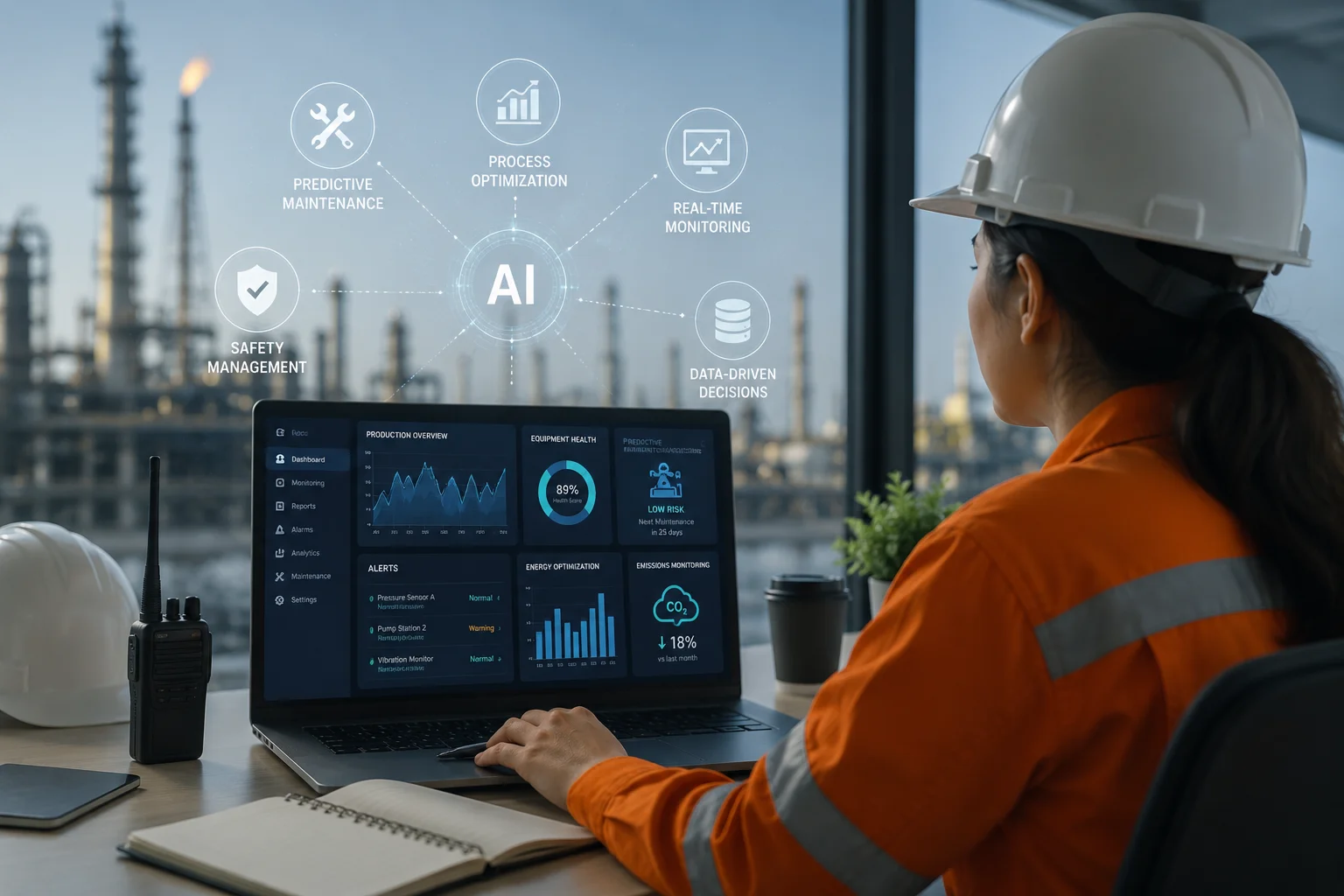
AI and Sustainability: Carbon Capture and Smarter Energy Operations
Sustainability is a growing priority across the energy sector, and AI is playing a key role in supporting this transition. One of the most important areas is carbon capture, utilisation, and storage. AI is being used to optimise the capture process, monitor CO2 injection, and ensure the long-term stability of storage sites.
By analysing real-time data, AI systems can identify inefficiencies and suggest improvements, helping to reduce emissions and improve overall performance. AI is also being used to optimise energy-intensive processes across the value chain.
From refining operations to transportation logistics, these technologies are helping companies to reduce their environmental impact while maintaining productivity.
To learn more about how carbon capture projects are shaping the future of energy, explore our carbon capture recruitment services.
For those working in oil and gas jobs, this creates new opportunities to contribute to sustainability initiatives. It also introduces new responsibilities, as professionals are expected to consider environmental impact alongside operational performance.
From an oil and gas recruitment perspective, this is driving demand for candidates who understand both traditional energy operations and emerging sustainability technologies. The ability to work at this intersection is becoming increasingly valuable.
New Hybrid Roles Emerging Across Oil and Gas Jobs
One of the most significant impacts of AI is the emergence of new hybrid roles across oil and gas jobs.
These roles combine traditional engineering or operational expertise with digital and data-driven skills. Examples include:
- Data-enabled engineers
- Digital operations specialists
- AI integration leads
In these positions, professionals are not just applying technical knowledge. They are also:
- Working with large datasets
- Developing or applying algorithms
- Optimising processes using advanced tools
This shift is reshaping the talent landscape. Employers are placing a premium on candidates who can adapt to new technologies and continuously develop their skills.
For junior professionals, this presents a clear opportunity. Those who build digital capabilities early in their careers can progress more quickly, and add value across multiple areas.
For oil and gas recruiters, identifying these hybrid candidates is becoming a key priority. It requires a strong understanding of both technical roles and emerging digital trends.
As the industry continues to evolve, demand for these skills is only expected to increase.
How Hiring Strategies Are Evolving in Oil and Gas Recruitment
The changes driven by AI are forcing employers to rethink how they approach hiring.
Traditional recruitment strategies often focused on specific technical qualifications and experience. While these remain important, they are no longer sufficient on their own.
Today, employers are looking for adaptable, tech-enabled professionals who can operate in dynamic environments. This includes individuals who are open to learning, comfortable with change, and capable of working with advanced technologies.
Balancing field experience with digital capability is a key challenge. Many experienced professionals have deep technical knowledge but may lack exposure to AI and data analytics. At the same time, newer candidates may have strong digital skills but less practical experience.
This is where oil and gas recruitment strategies are evolving. Employers are increasingly focusing on transferable skills and investing in training and development to bridge gaps.
Global competition for talent is also intensifying. Companies are looking beyond local markets to find the right candidates, making international oil and gas staffing more important than ever. For organisations that can adapt, this presents an opportunity to build a more capable and future-ready workforce.
The Role of Oil and Gas Consultants in an AI-Driven Market
As the talent landscape becomes more complex, the role of recruitment partners is becoming increasingly important.
Oil and gas recruiters are no longer just sourcing candidates. They are helping organisations identify the skills they need, map talent across global markets, and develop strategies to secure the right people.
Similarly, the oil and gas consultant plays a key role in advising on workforce transformation. This includes understanding how AI is impacting roles and helping organisations align their hiring strategies with these changes.
Access to global networks is essential. Many of the skills required for hybrid roles are still relatively rare, and finding the right candidates requires a broad and well-connected approach.
By working with specialist partners, organisations can navigate these challenges more effectively and ensure they have access to the talent they need.
Overcoming Challenges: Trust, Skills Gaps, and AI Adoption
While the benefits of AI are clear, there are also challenges to consider.
One of the main concerns is trust. AI systems can sometimes produce inaccurate or misleading outputs, often referred to as hallucinations. This makes it essential for professionals to validate insights and ensure that decisions are based on reliable data.
Explainable AI is becoming increasingly important. This involves developing systems that can clearly explain how decisions are made, helping to build confidence and transparency.
Skills gaps are another challenge. Many organisations lack the in-house expertise needed to fully leverage AI technologies. This highlights the importance of training, upskilling, and targeted hiring.
For oil and gas staffing, this means taking a structured approach to workforce development. Employers need to invest in both new talent and the continuous development of existing teams.
How Orion Supports Oil and Gas Jobs in a Digital Future
As AI continues to reshape the industry, having the right talent in place is more important than ever.
Orion supports global oil and gas recruitment by connecting organisations with professionals who are equipped to thrive in a digital environment. With experience across engineering, operations, and emerging technology roles, we understand the evolving needs of the sector.
Our approach focuses on identifying hybrid talent that combines technical expertise with digital capability. We also support clients with workforce planning, helping them to build teams that are aligned with future demands.
With a strong global network and deep industry knowledge, Orion is well positioned to deliver effective oil and gas staffing solutions in an increasingly complex market.
If you are looking to secure oil and gas jobs please search our live jobs and register here to receive tailored job alerts. If you are an employer looking to build a team with future-ready talent, contact us now to discuss how we can support your hiring requirements.
Your Questions, Answered
How is AI changing oil and gas jobs?
AI is changing oil and gas jobs by enhancing decision-making, improving efficiency, and enabling predictive operations across exploration, production, and maintenance. It is allowing professionals to work more effectively with data and optimise performance across the industry.
What skills are needed for oil and gas jobs in 2026?
Oil and gas jobs in 2026 require a combination of engineering expertise, data literacy, and the ability to work with AI and digital tools. Adaptability, problem-solving, and the ability to interpret data-driven insights are also increasingly important.
Are AI technologies replacing jobs in the oil and gas industry
No, AI technologies are enhancing oil and gas jobs rather than replacing them. They enable professionals to focus on higher-value tasks, such as decision-making, optimisation, and strategic planning, while automation supports routine processes.
How are oil and gas recruiters adapting to AI-driven hiring?
Oil and gas recruiters are adapting by focusing on hybrid skill sets, global talent sourcing, and identifying candidates with both technical expertise and digital capabilities. They are also supporting clients in building future-ready teams.
What new roles are emerging in oil and gas staffing?
New roles emerging in oil and gas staffing include digital operations specialists, data-enabled engineers, AI integration leads, and other hybrid positions that combine technical knowledge with digital and data-driven skills.
Related Posts

Can an Electrician Become an Electrical Engineer?
09 Oct, 2026